Buy ukrgazeta.eu ?
We are moving the project
ukrgazeta.eu .
Are you interested in purchasing the domain
ukrgazeta.eu ?
domain@kv-gmbh.de · 0541-91531010
Buy ukrgazeta.eu ?
How do you factor out a factor?
To factor out a factor from an expression, you need to identify a common factor that can be divided out of each term in the expression. This involves finding the greatest common factor (GCF) of the terms. Once you have identified the GCF, you can divide each term by this factor to simplify the expression. Factoring out a factor helps to simplify the expression and make it easier to work with or solve. **
How do you factor out a common factor?
To factor out a common factor from an expression, you need to identify the largest common factor that divides evenly into all terms of the expression. Once you have identified the common factor, you can divide each term by this factor and rewrite the expression as the product of the common factor and the remaining terms. This process simplifies the expression and makes it easier to work with or solve. **


Similar search terms for Factor
Top-Angebote
Products related to Factor:
-
From the Archives: Black History and Culture Value PackThis brand-new series is rooted in a profound commitment to shedding light on some of the important -- and often lesser-known -- aspects of Black history. From the Archives features landmarks, events, people, and artistic endeavors that have played...26,99 $*Shipping: 0,00 $Secure redirect to the provider
-
DK The Little Book Of Series 6 Books Collection Set (Economics, Politics, Shakespeare, Philosophy, Psychology, History)The Little Book Of Economics From the earliest forms of currency to the Industrial Revolution, and from the birth of the stock market to free-market capitalism and globalized trade, The Little Book of Economics brings economic theory and the work of key economists to life. Journeying through centuries of economic thought, it is the perfect pocket-sized guide to the subject. The Little Book Of Politics From the origins of democracy to Machiavelli's cunning statecraft, and from Rousseau's "social contract" to the American Declaration of Independence, Marxist communism, the dawn of populism, and identity politics, The Little Book of Politics examines the philosophies behind the different political beliefs and methods of government used around the world over the course of human history. The Little Book Of Shakespeare This bold book covers every work, from the comedies of Twelfth Night and As You Like It to the tragedies of Julius Caesar and Hamlet, plus lost plays and less well-known works of poetry. Easy-to-understand graphics and illustrations bring the themes, plots, characters and language of Shakespeare to life, including illustrated timelines which offer an at-a-glance summary of the action for each play. With detailed plot summaries and an in-depth analysis of the major characters and themes, this is a brilliant, innovative exploration of the entire canon of Shakespeare plays, sonnets and poetry. The Little Book Of Philosophy To the complete novice learning about philosophy can be daunting - The Little Book of Philosophy changes all that. With the use of powerful and easy-to-follow images, famous quotations, and explanations that are easily understandable, this book cuts through any misunderstandings to demystify the subject. The Little Book Of Psychology DK's The Little Book of Psychology answers all these questions and provides an insight into this fascinating field of science. Whether you are a student, an expert, a novice, or have a general interest in the human mind, this portable guide is the perfect choice to start exploring and understanding psychology. The Little Book Of History The Little Book of History charts world history from the dawn of civilisation to the modern culture we live in today. From the origins of homo-sapiens to the release of Nelson Mandela, from the French Revolution to the Space Race, The Little Book of History is a stunning exploration of the human timeline up to and including modern Islam, the world wide web, and the global financial crisis.14,99 £*Shipping: 2,99 £Secure redirect to the provider




-
How do I factor out the common factor?
To factor out the common factor in an algebraic expression, you need to identify the largest factor that is common to all the terms. Once you have identified this common factor, you can divide each term by this factor. The result will be the factored form of the expression, where the common factor is outside the parentheses and the remaining terms are inside the parentheses. This process simplifies the expression and makes it easier to work with. **
-
How do you factor out the greatest common factor?
To factor out the greatest common factor from a polynomial, you first identify the common factors of all the terms in the polynomial. Then, you divide each term by the greatest common factor and write the result as a product of the greatest common factor and the remaining terms. This process simplifies the polynomial and makes it easier to work with. **
-
Is it a push factor or a pull factor?
The statement "I want to leave my current job because of the lack of career advancement opportunities" is a push factor. This is because the dissatisfaction with the current job is pushing the individual to seek better opportunities elsewhere. **
-
What is the magnification factor and the scaling factor k?
The magnification factor is the ratio of the size of an object to the size of its image. It is used to describe how much larger or smaller an image is compared to the object. The scaling factor, denoted as k, is a numerical value that represents the change in size of an object when it is transformed. It is used to determine the relationship between the original size of an object and its size after a transformation has been applied. **

What is the magnification factor and the scale factor k?
The magnification factor is the ratio of the size of an image to the size of the object being observed. It is a measure of how much larger or smaller an image appears compared to the actual object. The scale factor, denoted as k, is a numerical value that represents the ratio of the size of an image to the size of the object. It is used to determine the relationship between the dimensions of the object and its corresponding image. **
How do you factor out terms with a given factor?
To factor out terms with a given factor, you can divide each term in the expression by the given factor. This will allow you to rewrite the expression as a product of the given factor and the remaining terms. For example, if you have the expression 3x + 6y and you want to factor out the common factor of 3, you would divide each term by 3 to get 3(x + 2y). This process simplifies the expression and makes it easier to work with. **
Top-Angebote
Products related to Factor:
-
Yellow Kite The Female Factor & The Food Medic – Dr Hazel Wallace 2 Book CollectionDr Hazel Wallace Collection 2 Books Set (The Female Factor, The Food Medic): The Female Factor: The male body has always been the default body in clinical medicine, making the assumption that women are just smaller versions of men. This could not be more wrong.This bold, comprehensive guide to understanding women's health shakes up the narrative for women of all ages. The Female Factor provides methods to protect and maximise your health in positive, affirming steps.Spanning nutrition, movement, mood, sleep and 50 balanced and delicious recipes, this is a blueprint to understanding and aligning your wellbeing, your hormones and your body, both in the short-term and long-term, filled with practical and insightful information to harness throughout the course of your life. The Food Medic: 'I'm a girl who juggles two jobs, who loves to lift, who adores real food - and can't resist chocolate.As a junior doctor and a personal trainer, I know that we all feel our best when we are free of illness, full of energy and at a healthy weight - and I know it can be done, even if you lead the busiest of lives! I want to debunk the myths that are out there surrounding dieting and instead offer solid, evidence-based advice.I want to bridge the gap between mainstream medicine and nutrition and help you take full control of your fitness and wellbeing, so you will never have to diet again.I want to show you that eating the most natural, unrefined and unprocessed wholefood ingredients can be enjoyable, uncomplicated and easy to incorporate into a busy lifestyle.22,98 £*Shipping: 2,99 £Secure redirect to the provider
-
Sesderma Factor G Renew Eye ContourAn eye contour cream for wrinkles and signs of ageing. This product anti-aging cream. Firming and anti wrinkles: 5 growth factors. Anti-dark circles: vitamin K oxide, pinaxide (pinanediol and camphanediol). Anti-pufiness: liposomes. this product Cream is based on the concept of Genocosmetics, which acts on the cell nucleus and stimulates cell proliferation and activity.26,93 £*Shipping: 7,11 £Secure redirect to the provider
-
From the Archives: Black History and Culture Value PackThis brand-new series is rooted in a profound commitment to shedding light on some of the important -- and often lesser-known -- aspects of Black history. From the Archives features landmarks, events, people, and artistic endeavors that have played...26,99 $*Shipping: 0,00 $Secure redirect to the provider
-
DK The Little Book Of Series 6 Books Collection Set (Economics, Politics, Shakespeare, Philosophy, Psychology, History)The Little Book Of Economics From the earliest forms of currency to the Industrial Revolution, and from the birth of the stock market to free-market capitalism and globalized trade, The Little Book of Economics brings economic theory and the work of key economists to life. Journeying through centuries of economic thought, it is the perfect pocket-sized guide to the subject. The Little Book Of Politics From the origins of democracy to Machiavelli's cunning statecraft, and from Rousseau's "social contract" to the American Declaration of Independence, Marxist communism, the dawn of populism, and identity politics, The Little Book of Politics examines the philosophies behind the different political beliefs and methods of government used around the world over the course of human history. The Little Book Of Shakespeare This bold book covers every work, from the comedies of Twelfth Night and As You Like It to the tragedies of Julius Caesar and Hamlet, plus lost plays and less well-known works of poetry. Easy-to-understand graphics and illustrations bring the themes, plots, characters and language of Shakespeare to life, including illustrated timelines which offer an at-a-glance summary of the action for each play. With detailed plot summaries and an in-depth analysis of the major characters and themes, this is a brilliant, innovative exploration of the entire canon of Shakespeare plays, sonnets and poetry. The Little Book Of Philosophy To the complete novice learning about philosophy can be daunting - The Little Book of Philosophy changes all that. With the use of powerful and easy-to-follow images, famous quotations, and explanations that are easily understandable, this book cuts through any misunderstandings to demystify the subject. The Little Book Of Psychology DK's The Little Book of Psychology answers all these questions and provides an insight into this fascinating field of science. Whether you are a student, an expert, a novice, or have a general interest in the human mind, this portable guide is the perfect choice to start exploring and understanding psychology. The Little Book Of History The Little Book of History charts world history from the dawn of civilisation to the modern culture we live in today. From the origins of homo-sapiens to the release of Nelson Mandela, from the French Revolution to the Space Race, The Little Book of History is a stunning exploration of the human timeline up to and including modern Islam, the world wide web, and the global financial crisis.14,99 £*Shipping: 2,99 £Secure redirect to the provider
-
How do you factor out a factor?
To factor out a factor from an expression, you need to identify a common factor that can be divided out of each term in the expression. This involves finding the greatest common factor (GCF) of the terms. Once you have identified the GCF, you can divide each term by this factor to simplify the expression. Factoring out a factor helps to simplify the expression and make it easier to work with or solve. **
-
How do you factor out a common factor?
To factor out a common factor from an expression, you need to identify the largest common factor that divides evenly into all terms of the expression. Once you have identified the common factor, you can divide each term by this factor and rewrite the expression as the product of the common factor and the remaining terms. This process simplifies the expression and makes it easier to work with or solve. **
-
How do I factor out the common factor?
To factor out the common factor in an algebraic expression, you need to identify the largest factor that is common to all the terms. Once you have identified this common factor, you can divide each term by this factor. The result will be the factored form of the expression, where the common factor is outside the parentheses and the remaining terms are inside the parentheses. This process simplifies the expression and makes it easier to work with. **
-
How do you factor out the greatest common factor?
To factor out the greatest common factor from a polynomial, you first identify the common factors of all the terms in the polynomial. Then, you divide each term by the greatest common factor and write the result as a product of the greatest common factor and the remaining terms. This process simplifies the polynomial and makes it easier to work with. **
Similar search terms for Factor
-
Segle Skin Factor Barrier Face Cream Gel 30mLA facial cream for wrinkles and signs of ageing. Unveil the secret to flawless skin with Skin Factor Barrier Gel Cream. Regenerative Power: Enriched with centella asiatica extract and growth factors, enhancing skin texture and minimizing wrinkles. Barrier Function Reinforcement: Features ceramides and niacinamide, strengthening the skin's natural barrier.19,59 £*Shipping: 5,34 £Secure redirect to the provider
-
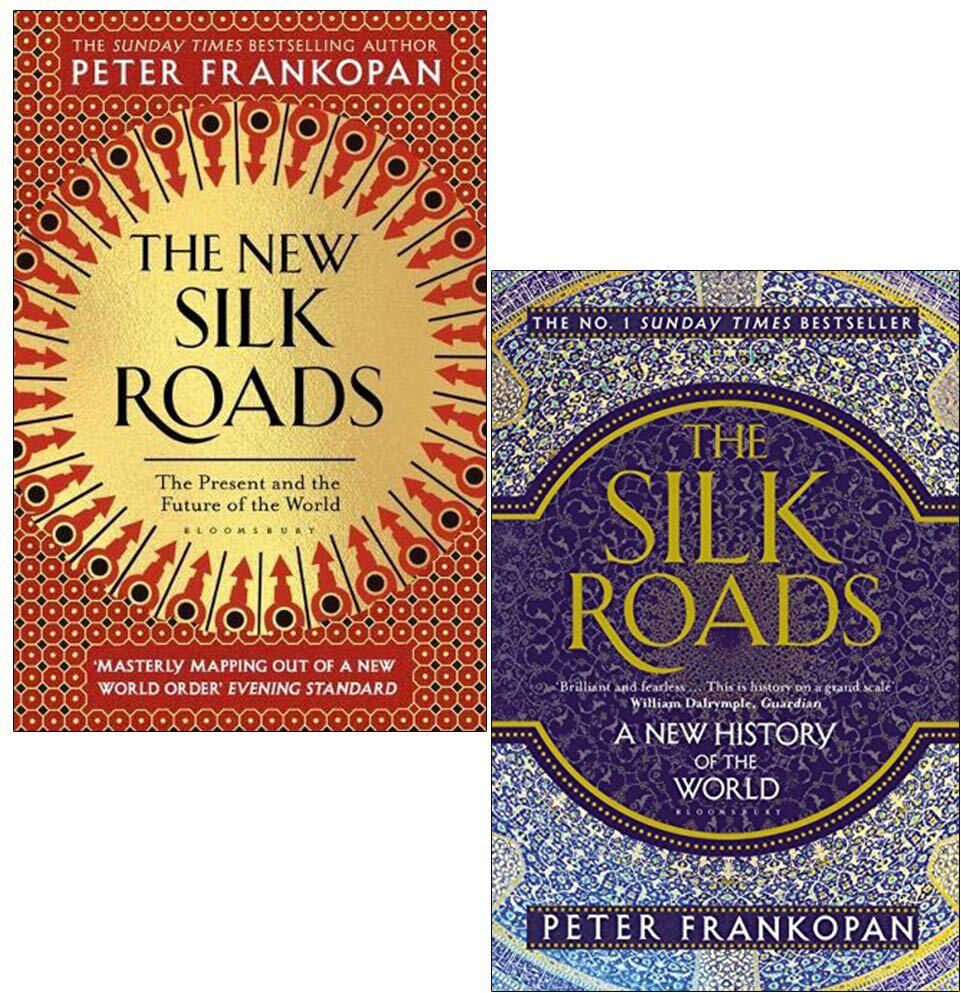
Bloomsbury Publishing The Silk Roads & The New Silk Roads 2 Book Set by Peter Frankopan – History & Global Politics CollectionThe New Silk Roads The Present and Future of the World The New Silk Roads takes a fresh look at the relationships being formed along the length and breadth of the ancient trade routes today. The world is changing dramatically and in an age of Brexit and Trump; the themes of isolation and fragmentation permeating the western world stand in sharp contrast to events along the Silk Roads; where ties are being strengthened and mutual cooperation established.This prescient contemporary history provides a timely reminder that we live in a world that is profoundly interconnected. The Silk Roads: A New History of the World For centuries; fame and fortune were to be found in the west in the New World of the Americas. Today; it is the east which calls out to those in search of riches and adventure. Sweeping right across Central Asia and deep into China and India; a region that once took centre stage is again rising to dominate global politics; commerce and culture.16,98 £*Shipping: 2,99 £Secure redirect to the provider
-
Is it a push factor or a pull factor?
The statement "I want to leave my current job because of the lack of career advancement opportunities" is a push factor. This is because the dissatisfaction with the current job is pushing the individual to seek better opportunities elsewhere. **
-
What is the magnification factor and the scaling factor k?
The magnification factor is the ratio of the size of an object to the size of its image. It is used to describe how much larger or smaller an image is compared to the object. The scaling factor, denoted as k, is a numerical value that represents the change in size of an object when it is transformed. It is used to determine the relationship between the original size of an object and its size after a transformation has been applied. **
-
What is the magnification factor and the scale factor k?
The magnification factor is the ratio of the size of an image to the size of the object being observed. It is a measure of how much larger or smaller an image appears compared to the actual object. The scale factor, denoted as k, is a numerical value that represents the ratio of the size of an image to the size of the object. It is used to determine the relationship between the dimensions of the object and its corresponding image. **
-
How do you factor out terms with a given factor?
To factor out terms with a given factor, you can divide each term in the expression by the given factor. This will allow you to rewrite the expression as a product of the given factor and the remaining terms. For example, if you have the expression 3x + 6y and you want to factor out the common factor of 3, you would divide each term by 3 to get 3(x + 2y). This process simplifies the expression and makes it easier to work with. **
* All prices are inclusive of VAT and, if applicable, plus shipping costs. The offer information is based on the details provided by the respective shop and is updated through automated processes. Real-time updates do not occur, so deviations can occur in individual cases. ** Note: Parts of this content were created by AI.