Buy ukrgazeta.eu ?
We are moving the project
ukrgazeta.eu .
Are you interested in purchasing the domain
ukrgazeta.eu ?
domain@kv-gmbh.de · 0541-91531010
Buy ukrgazeta.eu ?
Is that relativity?
Yes, that is relativity. Relativity is a theory developed by Albert Einstein that describes how the laws of physics are the same for all non-accelerating observers and how time and space are intertwined in a concept known as spacetime. It has been confirmed through numerous experiments and observations and has revolutionized our understanding of the universe. **
What does relativity mean?
Relativity refers to the concept that the measurements of space and time can vary depending on the observer's frame of reference. This idea was famously developed by Albert Einstein in his theory of general relativity, which revolutionized our understanding of gravity and the nature of the universe. In essence, relativity means that there is no absolute standard for measuring space and time, and that these measurements can be different for different observers depending on their relative motion and gravitational fields. **


Similar search terms for Relativity
Top-Angebote
Products related to Relativity:
-
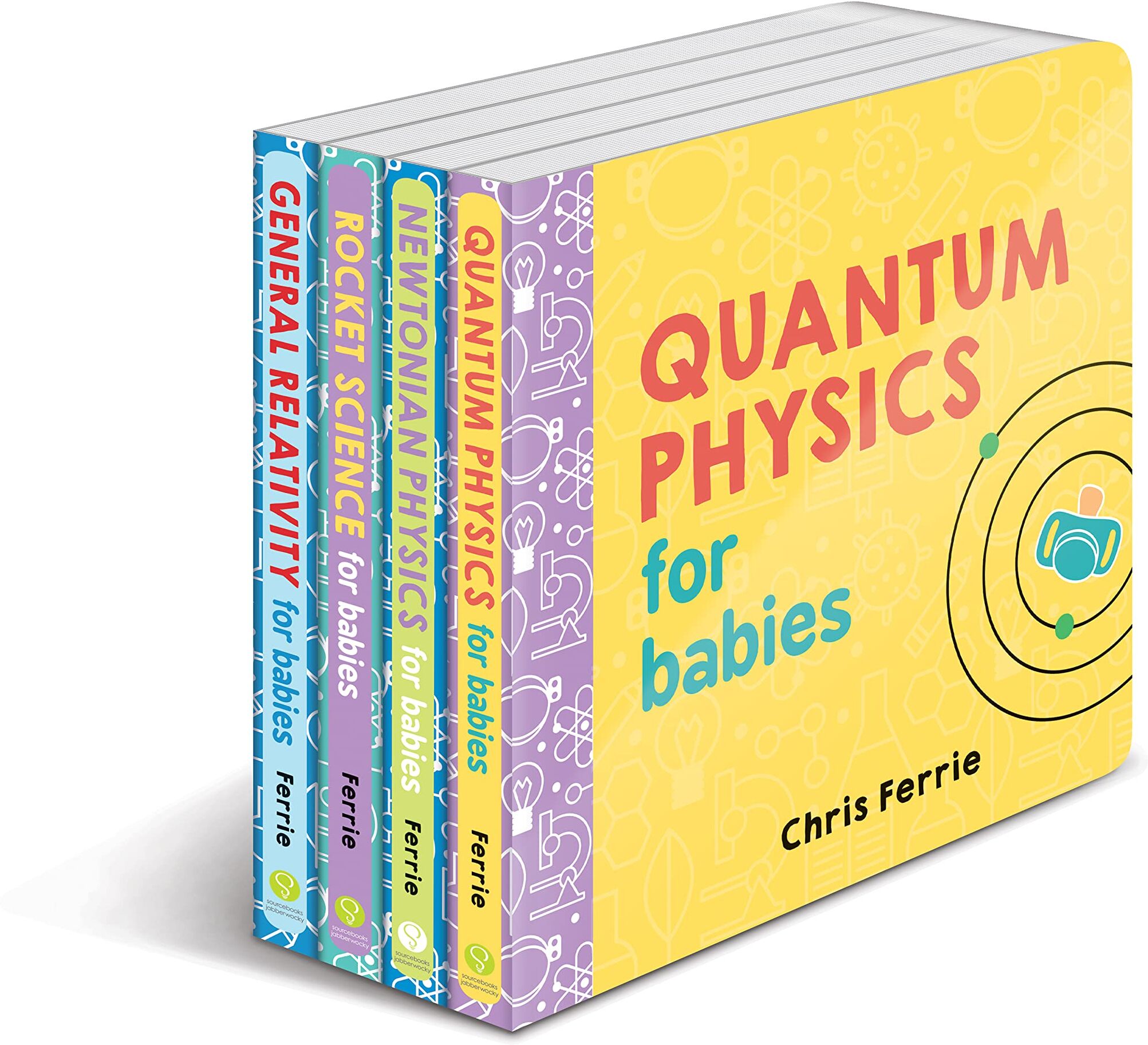
Sourcebooks ltd Baby University Four-Book Set (Quantum Physics, Rocket Science, General Relativity, Newtonian Physics)The perfect gift for your future genius! Written by an expert, the Baby University series features colorful, simple introductions to scientific principles and are beloved by babies―and grownups! Included in this Four-Book Set:• Quantum Physics for Babies• Rocket Science for Babies• General Relativity for Babies• Newtonian Physics for BabiesThis series is the perfect way to introduce basic scientific concepts to even the youngest scientist.12,99 £*Shipping: 2,99 £Secure redirect to the provider
-
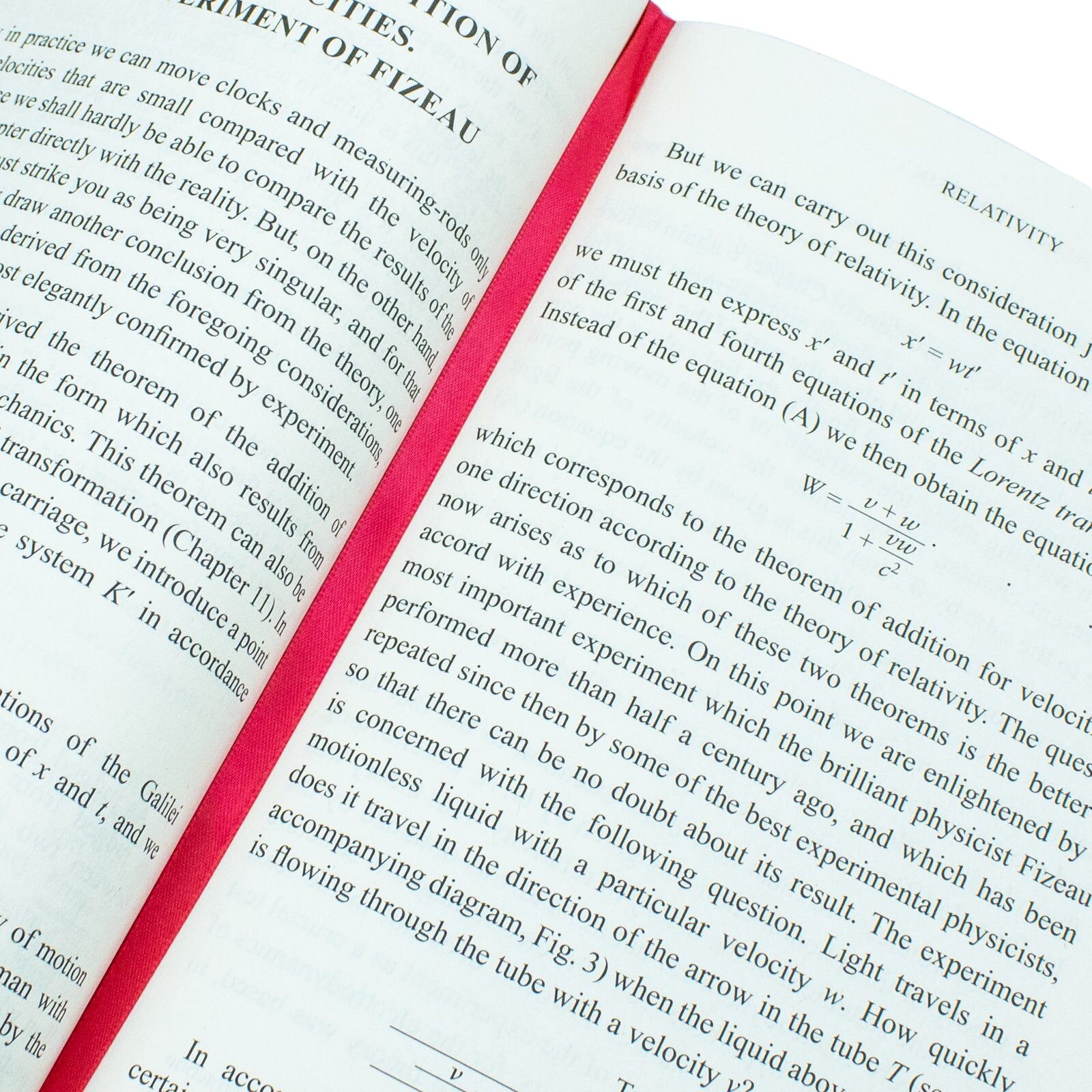
Wilco International LLP Relativity: The Special and General by Albert Einstein (Deluxe Hardback Sprayed Edge Edition)Albert Einstein steps away from complex equations to explain, in simple terms, how space bends, time stretches, and gravity connects everything. In Relativity, he encourages readers to reconsider their understanding of motion and time, providing a unique insight into the mind that transformed modern physics with clarity rather than jargon.4,50 £*Shipping: 1,99 £Secure redirect to the provider
-
From the Archives: Black History and Culture Value PackThis brand-new series is rooted in a profound commitment to shedding light on some of the important -- and often lesser-known -- aspects of Black history. From the Archives features landmarks, events, people, and artistic endeavors that have played...26,99 $*Shipping: 0,00 $Secure redirect to the provider
-
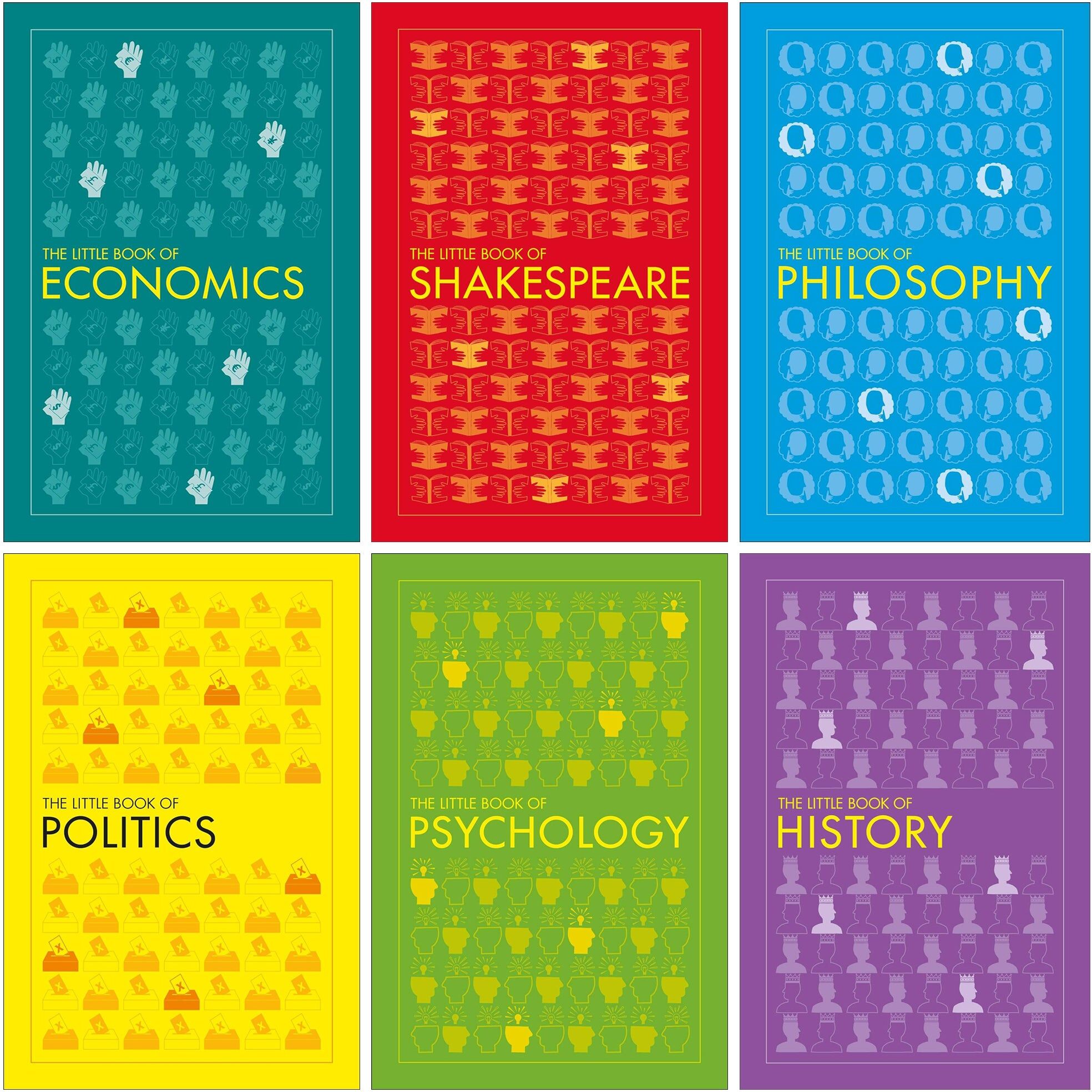
DK The Little Book Of Series 6 Books Collection Set (Economics, Politics, Shakespeare, Philosophy, Psychology, History)The Little Book Of Economics From the earliest forms of currency to the Industrial Revolution, and from the birth of the stock market to free-market capitalism and globalized trade, The Little Book of Economics brings economic theory and the work of key economists to life. Journeying through centuries of economic thought, it is the perfect pocket-sized guide to the subject. The Little Book Of Politics From the origins of democracy to Machiavelli's cunning statecraft, and from Rousseau's "social contract" to the American Declaration of Independence, Marxist communism, the dawn of populism, and identity politics, The Little Book of Politics examines the philosophies behind the different political beliefs and methods of government used around the world over the course of human history. The Little Book Of Shakespeare This bold book covers every work, from the comedies of Twelfth Night and As You Like It to the tragedies of Julius Caesar and Hamlet, plus lost plays and less well-known works of poetry. Easy-to-understand graphics and illustrations bring the themes, plots, characters and language of Shakespeare to life, including illustrated timelines which offer an at-a-glance summary of the action for each play. With detailed plot summaries and an in-depth analysis of the major characters and themes, this is a brilliant, innovative exploration of the entire canon of Shakespeare plays, sonnets and poetry. The Little Book Of Philosophy To the complete novice learning about philosophy can be daunting - The Little Book of Philosophy changes all that. With the use of powerful and easy-to-follow images, famous quotations, and explanations that are easily understandable, this book cuts through any misunderstandings to demystify the subject. The Little Book Of Psychology DK's The Little Book of Psychology answers all these questions and provides an insight into this fascinating field of science. Whether you are a student, an expert, a novice, or have a general interest in the human mind, this portable guide is the perfect choice to start exploring and understanding psychology. The Little Book Of History The Little Book of History charts world history from the dawn of civilisation to the modern culture we live in today. From the origins of homo-sapiens to the release of Nelson Mandela, from the French Revolution to the Space Race, The Little Book of History is a stunning exploration of the human timeline up to and including modern Islam, the world wide web, and the global financial crisis.14,99 £*Shipping: 2,99 £Secure redirect to the provider

-
What is the theory of relativity?
The theory of relativity, proposed by Albert Einstein in the early 20th century, is a fundamental theory in physics that describes the relationship between space and time. It consists of two main parts: the special theory of relativity, which deals with the behavior of objects in uniform motion, and the general theory of relativity, which extends the principles of the special theory to include accelerated motion and the effects of gravity. The theory of relativity has had a profound impact on our understanding of the universe, leading to groundbreaking discoveries such as the bending of light around massive objects and the concept of spacetime. **
-
Who invented the theory of relativity?
The theory of relativity was developed by Albert Einstein in the early 20th century. It consists of two main parts: the special theory of relativity, published in 1905, and the general theory of relativity, published in 1915. Einstein's groundbreaking work revolutionized our understanding of space, time, and gravity, and has had a profound impact on the field of physics. **
-
Inventor of the theory of relativity
The inventor of the theory of relativity is Albert Einstein. He developed the theory of special relativity in 1905, which revolutionized our understanding of space, time, and energy. This theory laid the foundation for his later development of the theory of general relativity, which describes the force of gravity as a curvature of spacetime. Einstein's work has had a profound impact on our understanding of the universe and continues to influence scientific research and technological advancements. **
-
What is the relativity of motion?
The relativity of motion is a concept in physics that states that the laws of physics are the same for all observers, regardless of their relative motion. This means that the way we perceive motion and the effects of motion can vary depending on our frame of reference. For example, an object may appear to be moving at a certain speed from one observer's perspective, but may appear to be stationary from another observer's perspective. This concept is a fundamental principle of Einstein's theory of relativity. **

What is the relativity of speed?
The relativity of speed refers to the concept that the speed of an object is not absolute, but rather depends on the observer's frame of reference. This means that the speed of an object can appear differently to different observers depending on their relative motion. For example, if two cars are traveling at different speeds but in the same direction, an observer in one car will perceive the other car as moving slower than an observer on the side of the road. This concept is a fundamental principle of Einstein's theory of special relativity. **
What characteristics indicate relativity in molecules?
Relativity in molecules can be indicated by the presence of multiple atoms bonded together, resulting in a complex structure. Additionally, the arrangement of atoms and the types of bonds between them can also indicate relativity, as molecules with different structures can have different properties and behaviors. The size and shape of a molecule, as well as its overall stability and reactivity, are also important characteristics that can indicate relativity in molecules. **
Top-Angebote
Products related to Relativity:
-
A-Street Prints Relativity Charcoal Geometric WallpaperBold and dramatic, this edgy charcoal wallpaper features a gold geometric pattern. Gold and subtle silver accents add a glamorous flair to this softly textures design. Relativity is an unpasted, non woven wallpaper.125,93 $*Shipping: 0,00 $Secure redirect to the provider
-
A-Street Prints Relativity Off White Geometric WallpaperA champagne geometric print shimmers against an off-white background. Subtle silver dots and raised inks add a dimensional effect to its sleek linear pattern. Relativity is an unpasted, non woven wallpaper.139,99 $*Shipping: 0,00 $Secure redirect to the provider
-
Sourcebooks ltd Baby University Four-Book Set (Quantum Physics, Rocket Science, General Relativity, Newtonian Physics)The perfect gift for your future genius! Written by an expert, the Baby University series features colorful, simple introductions to scientific principles and are beloved by babies―and grownups! Included in this Four-Book Set:• Quantum Physics for Babies• Rocket Science for Babies• General Relativity for Babies• Newtonian Physics for BabiesThis series is the perfect way to introduce basic scientific concepts to even the youngest scientist.12,99 £*Shipping: 2,99 £Secure redirect to the provider
-
Wilco International LLP Relativity: The Special and General by Albert Einstein (Deluxe Hardback Sprayed Edge Edition)Albert Einstein steps away from complex equations to explain, in simple terms, how space bends, time stretches, and gravity connects everything. In Relativity, he encourages readers to reconsider their understanding of motion and time, providing a unique insight into the mind that transformed modern physics with clarity rather than jargon.4,50 £*Shipping: 1,99 £Secure redirect to the provider
-
Is that relativity?
Yes, that is relativity. Relativity is a theory developed by Albert Einstein that describes how the laws of physics are the same for all non-accelerating observers and how time and space are intertwined in a concept known as spacetime. It has been confirmed through numerous experiments and observations and has revolutionized our understanding of the universe. **
-
What does relativity mean?
Relativity refers to the concept that the measurements of space and time can vary depending on the observer's frame of reference. This idea was famously developed by Albert Einstein in his theory of general relativity, which revolutionized our understanding of gravity and the nature of the universe. In essence, relativity means that there is no absolute standard for measuring space and time, and that these measurements can be different for different observers depending on their relative motion and gravitational fields. **
-
What is the theory of relativity?
The theory of relativity, proposed by Albert Einstein in the early 20th century, is a fundamental theory in physics that describes the relationship between space and time. It consists of two main parts: the special theory of relativity, which deals with the behavior of objects in uniform motion, and the general theory of relativity, which extends the principles of the special theory to include accelerated motion and the effects of gravity. The theory of relativity has had a profound impact on our understanding of the universe, leading to groundbreaking discoveries such as the bending of light around massive objects and the concept of spacetime. **
-
Who invented the theory of relativity?
The theory of relativity was developed by Albert Einstein in the early 20th century. It consists of two main parts: the special theory of relativity, published in 1905, and the general theory of relativity, published in 1915. Einstein's groundbreaking work revolutionized our understanding of space, time, and gravity, and has had a profound impact on the field of physics. **
Similar search terms for Relativity
-
From the Archives: Black History and Culture Value PackThis brand-new series is rooted in a profound commitment to shedding light on some of the important -- and often lesser-known -- aspects of Black history. From the Archives features landmarks, events, people, and artistic endeavors that have played...26,99 $*Shipping: 0,00 $Secure redirect to the provider
-
DK The Little Book Of Series 6 Books Collection Set (Economics, Politics, Shakespeare, Philosophy, Psychology, History)The Little Book Of Economics From the earliest forms of currency to the Industrial Revolution, and from the birth of the stock market to free-market capitalism and globalized trade, The Little Book of Economics brings economic theory and the work of key economists to life. Journeying through centuries of economic thought, it is the perfect pocket-sized guide to the subject. The Little Book Of Politics From the origins of democracy to Machiavelli's cunning statecraft, and from Rousseau's "social contract" to the American Declaration of Independence, Marxist communism, the dawn of populism, and identity politics, The Little Book of Politics examines the philosophies behind the different political beliefs and methods of government used around the world over the course of human history. The Little Book Of Shakespeare This bold book covers every work, from the comedies of Twelfth Night and As You Like It to the tragedies of Julius Caesar and Hamlet, plus lost plays and less well-known works of poetry. Easy-to-understand graphics and illustrations bring the themes, plots, characters and language of Shakespeare to life, including illustrated timelines which offer an at-a-glance summary of the action for each play. With detailed plot summaries and an in-depth analysis of the major characters and themes, this is a brilliant, innovative exploration of the entire canon of Shakespeare plays, sonnets and poetry. The Little Book Of Philosophy To the complete novice learning about philosophy can be daunting - The Little Book of Philosophy changes all that. With the use of powerful and easy-to-follow images, famous quotations, and explanations that are easily understandable, this book cuts through any misunderstandings to demystify the subject. The Little Book Of Psychology DK's The Little Book of Psychology answers all these questions and provides an insight into this fascinating field of science. Whether you are a student, an expert, a novice, or have a general interest in the human mind, this portable guide is the perfect choice to start exploring and understanding psychology. The Little Book Of History The Little Book of History charts world history from the dawn of civilisation to the modern culture we live in today. From the origins of homo-sapiens to the release of Nelson Mandela, from the French Revolution to the Space Race, The Little Book of History is a stunning exploration of the human timeline up to and including modern Islam, the world wide web, and the global financial crisis.14,99 £*Shipping: 2,99 £Secure redirect to the provider
-
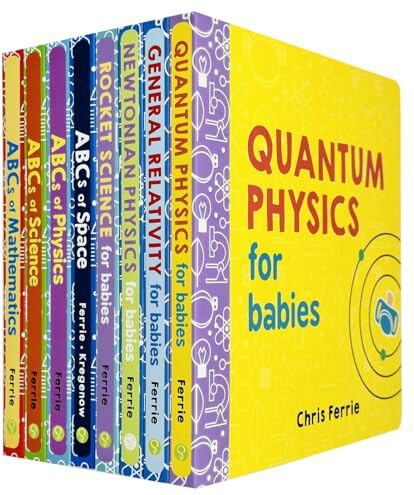
Sourcebooks Explore ltd Baby University Collection 8 Books Set By Chris Ferrie (Quantum Physics, General Relativity, Newtonian Physics, Rocket Science, ABCs of Space, ABCs ofBaby University Collection 8 Books Set By Chris Ferrie (Quantum Physics, General Relativity, Newtonian Physics, Rocket Science, ABCs of Space, ABCs of Physics, ABCs of Science, ABCs of Mathematics)63,92 £*Shipping: 0,00 £Secure redirect to the provider
-
Bloomsbury Publishing The Silk Roads & The New Silk Roads 2 Book Set by Peter Frankopan – History & Global Politics CollectionThe New Silk Roads The Present and Future of the World The New Silk Roads takes a fresh look at the relationships being formed along the length and breadth of the ancient trade routes today. The world is changing dramatically and in an age of Brexit and Trump; the themes of isolation and fragmentation permeating the western world stand in sharp contrast to events along the Silk Roads; where ties are being strengthened and mutual cooperation established.This prescient contemporary history provides a timely reminder that we live in a world that is profoundly interconnected. The Silk Roads: A New History of the World For centuries; fame and fortune were to be found in the west in the New World of the Americas. Today; it is the east which calls out to those in search of riches and adventure. Sweeping right across Central Asia and deep into China and India; a region that once took centre stage is again rising to dominate global politics; commerce and culture.16,98 £*Shipping: 2,99 £Secure redirect to the provider
-
Inventor of the theory of relativity
The inventor of the theory of relativity is Albert Einstein. He developed the theory of special relativity in 1905, which revolutionized our understanding of space, time, and energy. This theory laid the foundation for his later development of the theory of general relativity, which describes the force of gravity as a curvature of spacetime. Einstein's work has had a profound impact on our understanding of the universe and continues to influence scientific research and technological advancements. **
-
What is the relativity of motion?
The relativity of motion is a concept in physics that states that the laws of physics are the same for all observers, regardless of their relative motion. This means that the way we perceive motion and the effects of motion can vary depending on our frame of reference. For example, an object may appear to be moving at a certain speed from one observer's perspective, but may appear to be stationary from another observer's perspective. This concept is a fundamental principle of Einstein's theory of relativity. **
-
What is the relativity of speed?
The relativity of speed refers to the concept that the speed of an object is not absolute, but rather depends on the observer's frame of reference. This means that the speed of an object can appear differently to different observers depending on their relative motion. For example, if two cars are traveling at different speeds but in the same direction, an observer in one car will perceive the other car as moving slower than an observer on the side of the road. This concept is a fundamental principle of Einstein's theory of special relativity. **
-
What characteristics indicate relativity in molecules?
Relativity in molecules can be indicated by the presence of multiple atoms bonded together, resulting in a complex structure. Additionally, the arrangement of atoms and the types of bonds between them can also indicate relativity, as molecules with different structures can have different properties and behaviors. The size and shape of a molecule, as well as its overall stability and reactivity, are also important characteristics that can indicate relativity in molecules. **
* All prices are inclusive of VAT and, if applicable, plus shipping costs. The offer information is based on the details provided by the respective shop and is updated through automated processes. Real-time updates do not occur, so deviations can occur in individual cases. ** Note: Parts of this content were created by AI.